


Stunting is a timing problem.
The window to intervene closes in a child's first 1,000 days. In four community health centres in East Manggarai, DoctorTool put fast, accurate growth screening in the hands of local health cadres, so a child's decline is caught early enough to act on.
The children most at risk are the ones a paper system cannot follow.
East Manggarai sits among Indonesia's harder-to-reach districts. For many families, a growth check means hours of travel, and the measurement, once taken, is written on paper that no one reads back. Screening happens late, or once, and no one sees the trend.
Stunting is largely irreversible after the first 1,000 days. Detection, not treatment, is where the difference is made, and detection is exactly what distance and paperwork defeat.
One cadre, one phone, the whole screening at the health post.
A community health cadre runs the entire check on an ordinary smartphone, and the data reaches the clinic the moment it is taken. Built to work offline first, so an unreliable connection never stops the screening.
-
Install and sign in
A cadre installs the DoctorTool app on a standard smartphone and signs in. Nothing new to learn beyond the measuring devices themselves.
-
Register mother and child
Each mother and child is registered once. Their record follows them from visit to visit, instead of starting fresh every time.
-
Measure with DT Hub
Weight, length and vital signs are taken with DT Hub, an Internet-of-Medical-Things device that sends each reading to the app wirelessly. No manual transcription, so fewer errors.
-
Record the risk factors
The cadre adds the surrounding stunting indicators that a growth number alone would miss.
-
Sync to the clinic
The record syncs to the community health centre when a connection is available, where growth is charted against national standards and a stunting risk status is flagged.
By design: we built for the operator who is actually there. Clinical coding runs ICPC alongside ICD-10, because a primary-care worker does not think in hospital taxonomies. The interface is bilingual, Indonesian and English. The system maps onto the health structure the country already has, rather than asking a village to reorganise around software.
Delivered September 2025.
The district health office asked for more.
At the launch, the district health office welcomed the programme, noting that measurements which once needed manual recording now connect straight to the system, and expressing the hope that the equipment could be extended to other health centres in East Manggarai. Early detection, which is the entire point, becomes possible.
Aksi Digital NTT, East Manggarai.
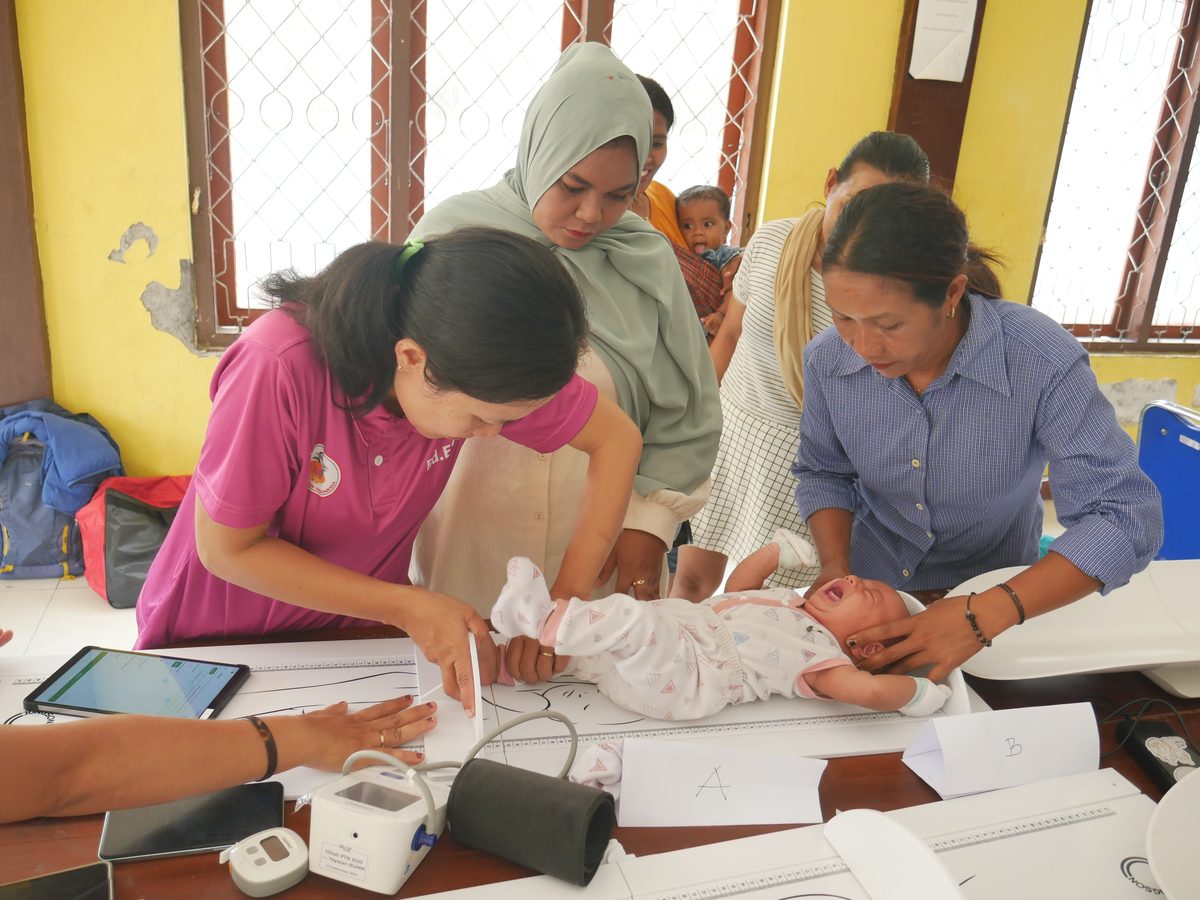
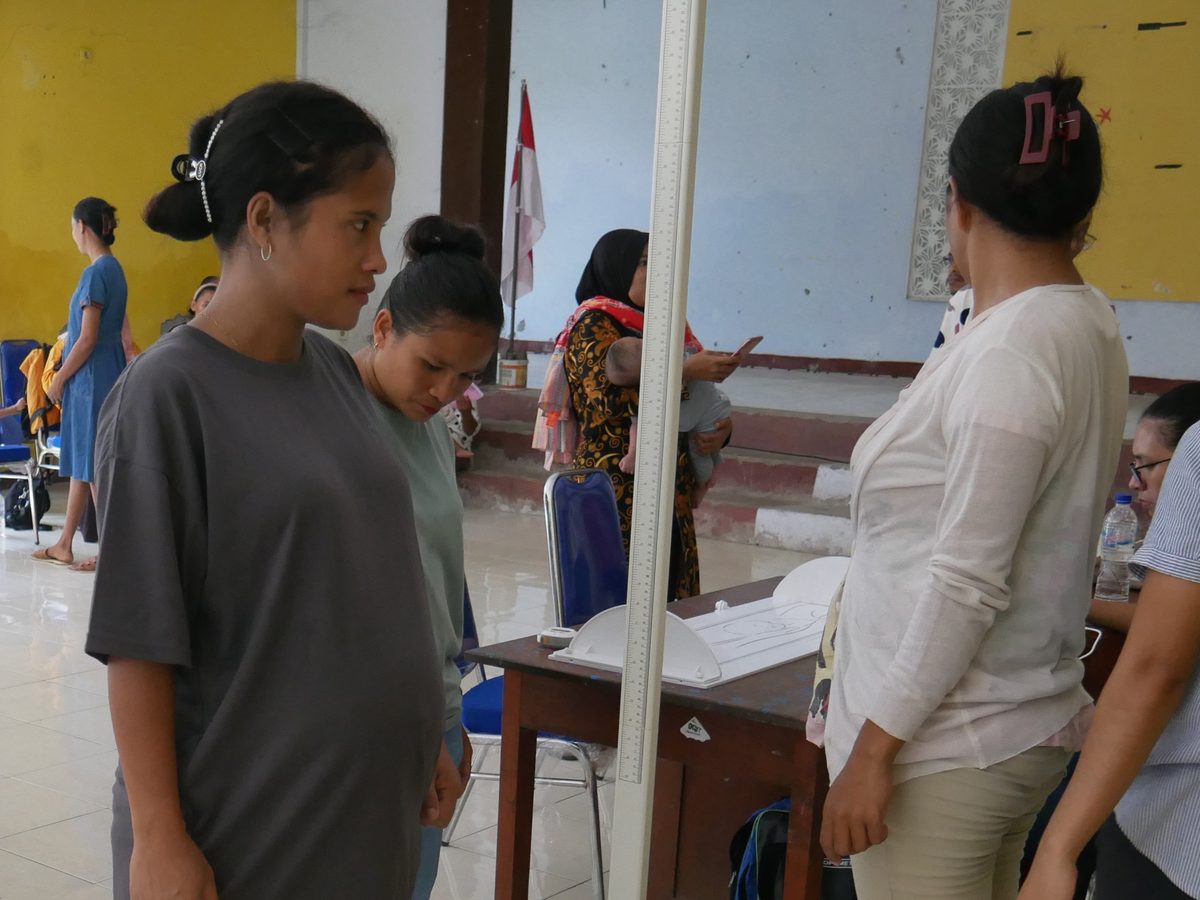
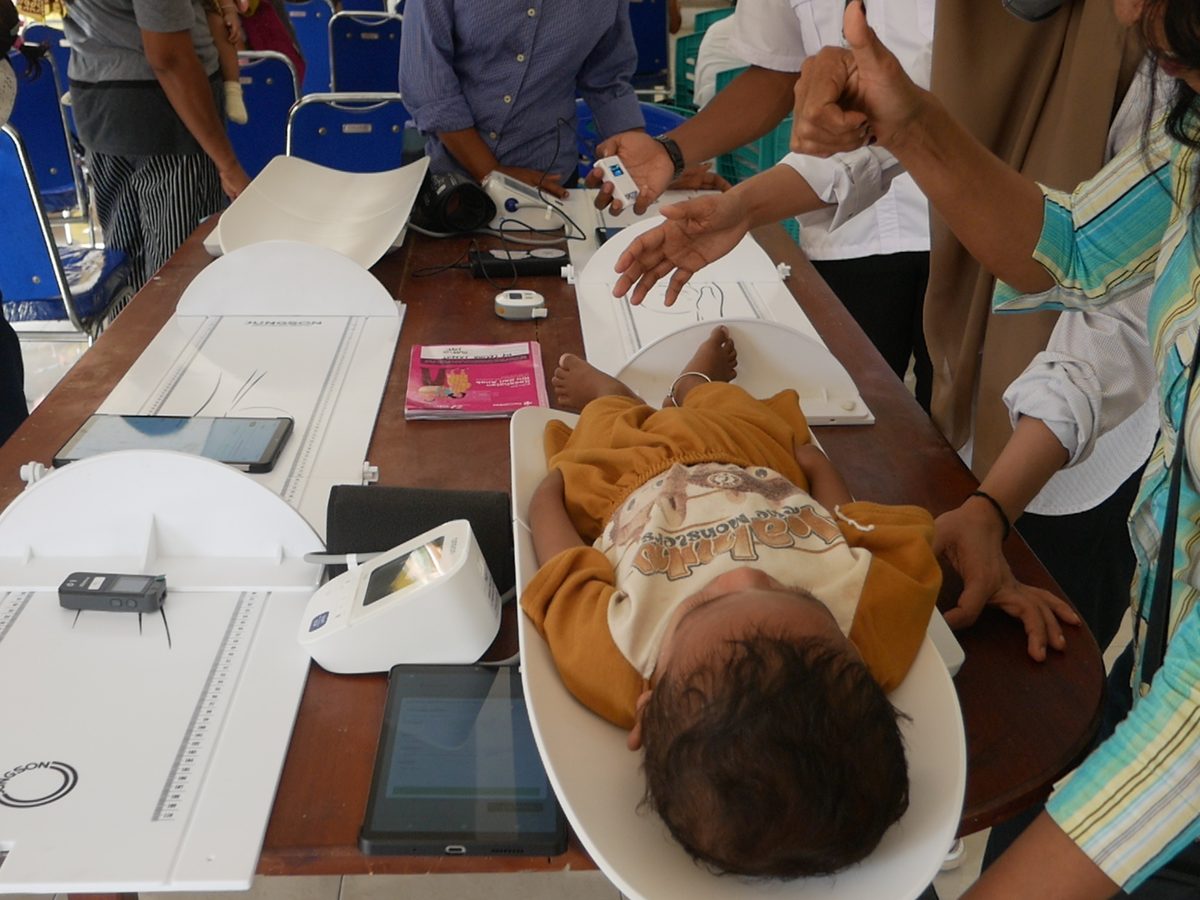
Run together, on the ground.
- Yayasan BUMN (Pikiran Terbaik Negeri)Funder, impact grant
- ANGIN FoundationImplementing partner
- Dinas Kesehatan Manggarai TimurLocal health authority
- Puskesmas Borong, Peot, Wae Lengga, ManoDelivery sites